Table of Contents
A small backyard is not a design problem to apologize for. A 12-by-16-foot patch of concrete, a shaded side-yard strip, or a fourth-floor balcony can hold a dining zone, a container garden, and a spot to actually relax, if you plan the vertical space and the sight lines instead of just the floor. The mistake most renters and first-time homeowners make is buying furniture before they have a layout, then wedging an oversized sectional into a space that needed a bistro set.
The fastest way to avoid that mistake is to preview the finished space before you spend a dollar. Snap a photo of your yard, courtyard, or balcony and run it through an AI design tool like GenRoom, which turns that photo into a photorealistic redesign in about 30 seconds. You can test a gravel patio, a vertical garden wall, or a pergola over the same corner and see which one earns the space before you commit. Below are the ideas that actually move the needle in a tight footprint, plus how to pressure-test each one visually.
How do you make a small backyard look bigger?
Make a small backyard look bigger by drawing the eye upward and outward: use vertical plantings, keep the ground plane uncluttered, add a mirror or a focal point on the back wall, and stick to one or two materials. Visual size is about continuity, not square footage. A yard that reads as one connected scene feels larger than a yard chopped into competing zones.
The highest-impact moves:
- Go vertical. A living wall or trellis frees the floor and adds greenery at eye level. Even a 6-foot section of wall-mounted planters can hold 12 to 20 plants.
- Use large-format pavers or continuous decking. Fewer grout lines and bigger units make the ground read as one uninterrupted surface.
- Limit the palette. One paving material plus one accent color keeps the space calm. Three or more materials makes a small yard feel busy and choppy.
- Add a single focal point. A specimen tree in a pot, a small water feature, or a bold outdoor mirror pulls the eye to one spot and creates depth.
- Raise the sight line. String lights or a slim pergola frame the space overhead and make it feel like a room, not a leftover.
What are the best small backyard layout ideas?
The best small-yard layouts assign every square foot one clear job: a dining zone, a lounge zone, and a green zone, arranged so you never have to walk through one to reach another. In a tight space, circulation is the enemy. Push furniture to the perimeter and keep the center open, and a 150-square-foot yard suddenly holds three functions.
Layouts that consistently work in small spaces:
- The corner L. An L-shaped bench in one corner seats four to five people on a footprint smaller than a loveseat, and the storage under the seat swallows cushions and tools.
- The single long line. Run a narrow counter or bar table against the longest wall with stools. Great for balconies 4 feet deep or less.
- The split patio-and-garden. Hardscape two-thirds for a table, plant the back third densely so the yard ends in green instead of a fence.
- The tuck-under dining set. A round bistro table with chairs that slide fully underneath reclaims the floor the moment you stand up.
This is exactly where a photo-to-render tool earns its keep. Instead of measuring, sketching, and imagining, you upload one photo and generate several layout options side by side. GenRoom handles yards and landscaping alongside interiors and facades, offers 50+ styles, and lets you upload up to 5 photos, so you can render the same corner as a modern gravel lounge, a cottage container garden, and a sleek dining nook, then pick the winner. As one landscape designer put it: “Clients approve a plan twice as fast when they can see it instead of picturing it.”

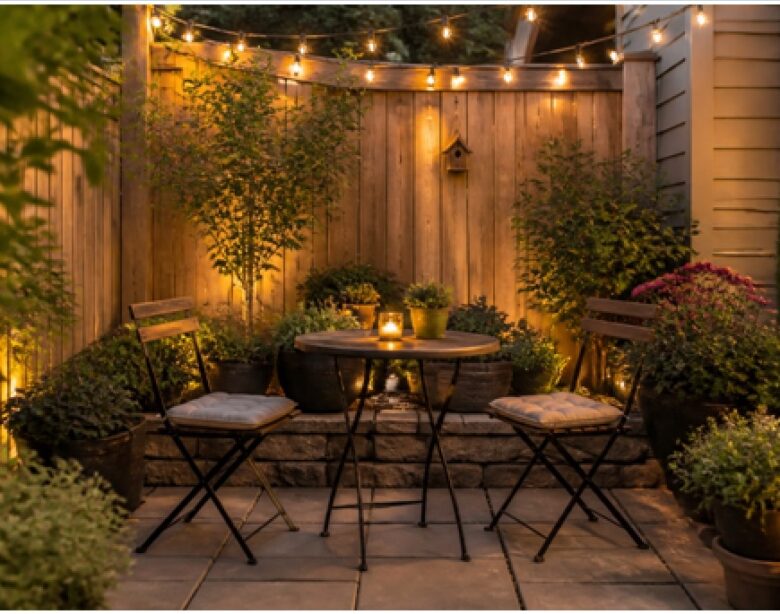
A courtyard or balcony gains usable green space when plants climb the walls instead of crowding the floor.
How can I add a garden to a tiny or paved yard?
Add a garden to a paved or tiny yard with containers, raised beds, and vertical systems rather than digging beds into the ground. Container gardening gives you full control over soil and sun, and it moves with you if you rent. You do not need a lawn to grow food or flowers, you need drainage and light.
Proven approaches for hard surfaces and small footprints:
- Grouped containers. Cluster pots of three heights, tall, medium, trailing, to create the illusion of a planted bed. Odd numbers read more naturally than even.
- A single raised bed. One 4-by-4-foot raised bed grows enough tomatoes, herbs, and greens to matter, and it defines the garden zone cleanly.
- Vertical planters and pockets. Wall-mounted felt pockets or stacked planters turn a blank fence into a productive herb wall.
- Railing planters on balconies. Over-the-rail boxes add growing space without stealing a single square foot of standing room.
Before you haul soil, render it. Testing a green wall or a raised bed in a photorealistic preview shows you the scale and the shadow it casts, so you learn a 4-foot bed blocks your only sunny corner before you build it, not after.
What furniture works best in a small outdoor space?
The best small-space outdoor furniture is multi-functional, movable, and scaled down: storage benches, nesting tables, folding chairs, and armless seating that tucks flush against walls. Bulk is the enemy. Every piece should earn its footprint twice, once as furniture and once as storage or flexibility.
What to prioritize:
- Storage seating. Benches and ottomans that open up hide cushions, hoses, and grill tools, critical when you have no shed.
- Foldable and stackable pieces. Chairs that fold flat let you clear the floor for a party or a yoga mat.
- Armless and backless seating. It slides fully under tables and against walls, reclaiming circulation space.
- A round table over a rectangle. Rounds fit more people in tight corners and remove the sharp edges you’d otherwise bump.
Do I need to hire a designer for a small yard?
For a cosmetic refresh, no, AI previews and a clear layout plan get most small yards there. For structural work, drainage, retaining walls, grading, or anything involving permits, hire a licensed pro. The line is simple: if it changes how water moves or what holds up soil, get a professional. If it’s furniture, plants, paint, and pavers, you can plan it yourself.
A smart, budget-friendly workflow:
- Photograph and render first. Lock the look before buying. AI redesign tools cost a fraction of a design consultation, GenRoom’s plans run $6.99 (Start), $19.99 (Basic), and $29.99 (Pro), with free starter credits to test it, versus hundreds for a single designer session.
- Use renders to get quotes. A photorealistic image tells a landscaper or contractor exactly what you want, which tightens their estimate.
- Call a pro for the load-bearing 20%. Grading, drainage, decks over a certain height, and retaining walls are worth the professional line item.
The Bottom Line
A small backyard rewards planning more than a big one does, because every square foot is visible and every mistake shows. Go vertical to free the floor, assign each zone one job, garden in containers and raised beds, and choose furniture that stores or folds. Then preview the whole thing from a single photo before you spend, so the money goes toward the layout you already know works. The smallest yards, planned well, often end up being the ones people actually use every day.
Frequently Asked Questions
How small is too small for a usable backyard?
Almost nothing is too small. A 4-by-6-foot balcony fits a bistro set and a herb wall. The trick is choosing one primary function, dining or lounging, rather than forcing both.
What’s the cheapest way to upgrade a small backyard?
Paint the fence a dark color to add depth, add string lights, and group container plants. Under $150 of changes can transform the space. Preview the fence color with an AI render first so you don’t repaint twice.
Can AI design tools handle outdoor spaces, not just interiors?
Yes. Tools like GenRoom redesign yards, landscaping, and facades in addition to interiors, and include virtual staging, an AI Editor, a Pro Model, and up to 4K output. You upload a photo of your actual yard and get a redesign of that space, not a generic template.
How do I make a shady, north-facing yard feel inviting?
Lean into shade-loving plants like ferns and hostas, use light-colored pavers to bounce what light there is, and add warm lighting for evenings. A render lets you test pale versus dark paving before you buy a pallet.
How long does an AI redesign actually take?
About 30 seconds per photorealistic render. That speed is the point, you can test six layouts in the time it would take to sketch one by hand.